 Spixed's Blog
Prologue
 Spixed
//
3289 WORDS
Spixed
//
3289 WORDSDedicated to the prologue of eighteen, paying tribute to the stars looked up from the gutter, and the growth that was deafening in the silence.
If the story diverges from reality, please regard it as another possible calculation result in a parallel universe.
……
At 10:30 PM, the notification chime marking the end of the livestream class dropped like a stone into a deep well, stirring a dull echo within me. I took off my headphones; my ears, slightly warm from prolonged wear, held the lingering warmth of reality.
The time in the bottom right corner of the screen ticked forward. In that instant, I severed the umbilical cord linking me to external knowledge. My cursor slid toward that familiar icon, skillfully docking into another dimension. The monitor went black for a split second before lighting up again. The login interface of Honkai: Star Rail emerged like a nocturnal creature. The cold light of the screen swelled like a tide, bleaching my slightly pale face into an overexposed negative.
Over one hundred and thirty warps. Hard pity, again.
Refusing to believe in my luck, I clicked the mouse. The star rail slid past—still a blinding purple. No gold light. This number was like a mocking code, marking a unilateral breach of contract between the God of Probability and me. In this cyber sea of stars, I am a “drifter” who is always half a beat behind. On the realistic battlefield named “Grade 12,” I can precisely deduce every formula, yet I singularly lack a talent called “resonance.” I can maintain long conversations with those around me, but I always feel like an old-fashioned receiver with signal delay, lonely capturing outdated frequencies outside their eager exchanges of new memes and hobbies.
…
Outside the door came the shuffling sound of slippers against the floor. That specific frequency belonged to my mother.
The entire process was smooth, almost a survival instinct—Alt + Tab for a rapid switch. The vast galaxy instantly folded into the darkness of the background, seamlessly replaced on the screen by a PDF document covered in notes. The hand on the keyboard withdrew, fingers hovering in the air for a split second before tapping the desk in a desultory rhythm. My back hunched slightly, and my facial muscles quickly switched from tension to a relaxed state of “deep contemplation.”
The door was pushed open a crack, and light sliced in like a sharp scalpel.
“Still studying?” My mother’s voice was suppressed, carrying a cautious gratification. “I heated a glass of milk for you. Drink it and get some sleep. Don’t push yourself too hard.”
“Yeah, I’ll sleep after I finish this chapter.” I didn’t turn my head, my voice dry and steady.
The door closed. At that moment, I heard something gently shatter inside my heart. This is my “contradiction”: I detest this deception, detest burning money on online classes while wasting time in games, yet I covet the phantom of the “sensible son” in my parents’ eyes even more. I am a despicable actor on the stage named Youth, collecting a paycheck I do not deserve—their unreserved love.
The glass of milk sat at the corner of the table, steaming. I picked it up, took a sip, and put it back. Soon, a wrinkled film formed on the surface of the liquid. I switched back to the game, looking at my empty Stellar Jade balance, and suddenly felt a vast emptiness, like a black hole swallowing all my interest.
……
“We are all in the gutter, but some of us are looking at the stars.”
This quote from Wilde sounds like an ancient prophecy. I am a contradiction covered in mud, standing in the gutter: on one side is the uncontrollable gravity of depravity, on the other is the self-loathing after sobering up. And my star is imprisoned within that 4.4-inch watch screen.
I thought of her.
My relationship with her is like this milk film. Seemingly harmonious and close, but in reality, I belong neither to the liquid nor the air. I am just that awkward semi-solid state suspended in between. Fragile to the touch, yet truly blocking everything.
In those days filled with exam papers, she was my only “diary.” I output fragments of this world to her, not just to vent, but to construct in my mind the curve of her drooping eyes and upturned mouth behind that tiny screen.
I would forward videos I scrolled past, telling her about the Physics teacher’s humor; I would roast the Chemistry teacher’s weird accent; I would share the outrageous demands from the Biology teacher and the homeroom teacher that left me helpless; I would show off the occasional soft pity I hit in Star Rail, or share which character I thought looked good… She was a qualified audience, always replying with a string of “hahaha,” a few emojis, and some comments. Through the cold pixels, I could see her eyes drooping slightly and the corners of her mouth lifting—her unique, slightly sly smile.
…
“How do I look at this electrolytic cell? Who discharges first at the anode? How does the solute concentration change between the two membranes?”
One night, she sent a picture. It was taken at a crooked angle, the lighting dim, like a distress signal from a distant planet.
I zoomed in on the picture and redrew it on scratch paper. I was good at this—drawing neat beakers, marking the cathode and anode, drawing arrows for electron flow, like arranging troops on an unknown battlefield to guard some kind of order.
“Chloride ions discharge at the anode,” I tapped character by character on the watch’s maddeningly small keyboard, like sending Morse code, “because the discharge order of ions in the solution…”
The next day during the break, you walked to my seat with the paper.
It was an extremely rare moment. You stood on my left, about thirty centimeters away. That distance was close enough to create an olfactory hallucination—I wasn’t sure if it was the lemon scent of your shampoo, the smell of fresh ink on the paper, or just a signal my brain fabricated to preserve this moment as my heart raced.
I sat in my seat, not daring to look up too high, only staring at the question.
“Here, look,” I pointed to the vertical line in the middle, “this is the ion exchange membrane. The solution in the container must remain electrically neutral, so sodium ions have to move through the membrane to the middle…”
You squatted down a little, leaning in to look at my pen tip.
“Oh—I get it!” You blinked, suddenly turned to look at me, eyes wide, and revealed a defenseless smile, like a smug kitten.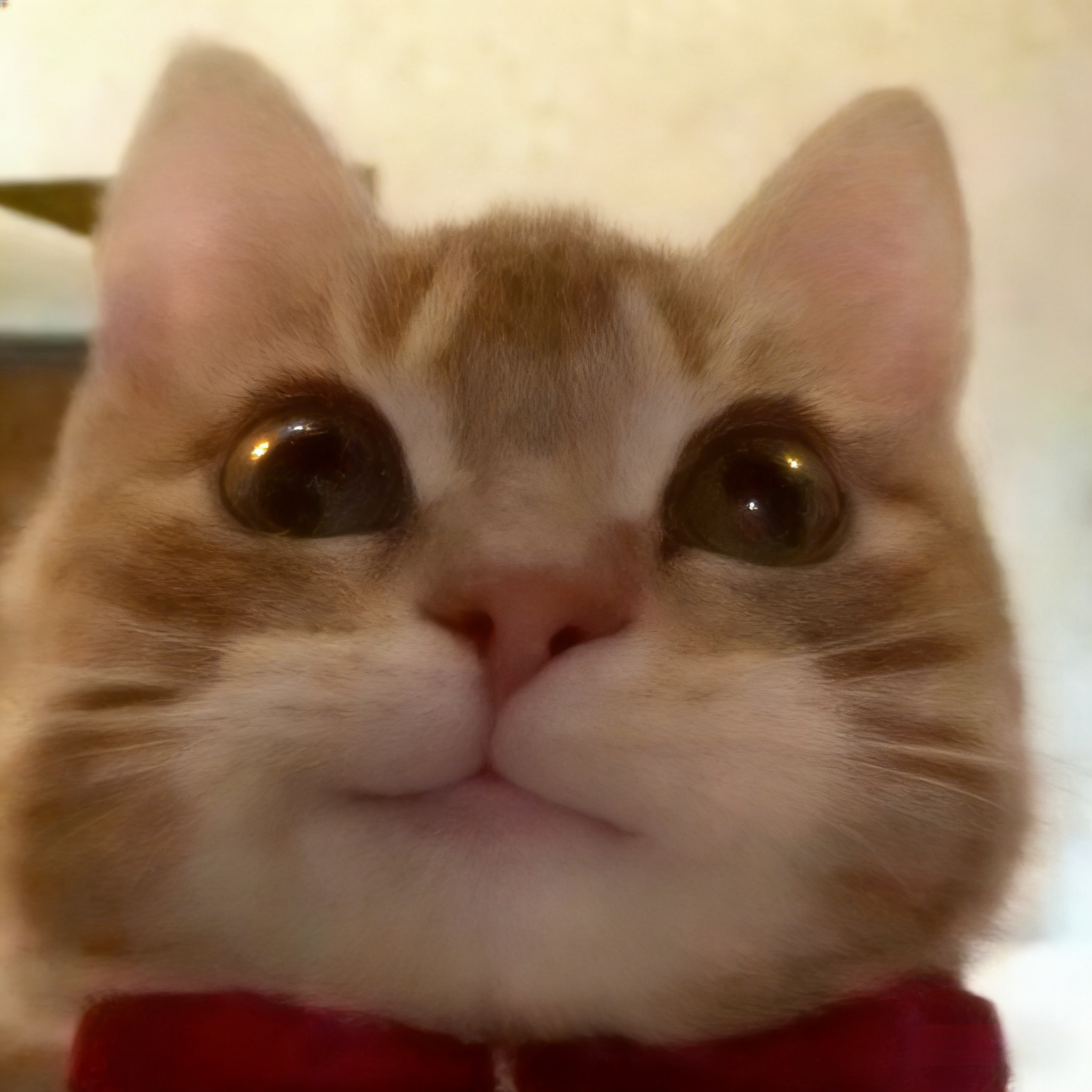
At that moment, the noisy horseplay around us and the harsh sound of boys dragging chairs in the back row all receded like a tide.
My heart skipped a beat. This feeling wasn’t like the fizz of a soda bottle being opened; it was more like listening to songs late at night with headphones and suddenly switching to an extremely quiet piano solo. I knew this melody was fleeting and would soon be drowned out by the next rock song, but in that second, the entire universe contained only this frequency.
I forced myself to look away from your gaze and continued explaining the rest to you. I tried hard to control my ears, attempting to use reason to cool down my capillaries, but in the end, they still irreversibly burned hot.
…
About twenty days ago, just as I was about to sleep, my watch vibrated.
“Happy Birthday! I bought you a gift; I’ll bring it to you tomorrow.”
The light of the text on the screen was bright. I was stunned for a moment and checked the calendar—there were still exactly twenty days until my birthday.
At that moment, my heart was surprisingly calm. It was like a chemical equilibrium problem: getting the date wrong represented “not caring,” which was even within my expectations of her; while buying a gift in advance represented a certain degree of “caring.” Positive and negative offset each other; the net heat of reaction was zero. I wasn’t sad, nor was I particularly happy; I just calmly pointed out her mistake.
But the next day, when two small boxes were truly handed to me by her, the rational defense line I had built collapsed instantly.
Because my birthday always falls during the winter break, close to the Chinese New Year. For eighteen years, I had grown accustomed to the cold quietness where classmates went home for the holidays, and no one remembered.
But at this moment, the heavy weight in my hand reminded me: In this second, I am remembered.
More importantly, the person giving the gift was her. Even if she got the date wrong, even if this was just courtesy between classmates, in that second, I truly felt the secret joy of being cared about by her.
……
However, questions have standard answers; feelings do not.
Actually, I knew it long ago. There is an invisible line between us.
I can be her most trusted “problem-solving machine,” her “electronic tree hollow” when she’s bored, but I will never be the person who keeps her tossing and turning late at night.
I am fully aware of this, yet I still seriously draw diagrams and explain whenever you ask “Why?”. Even though I know I will forever be just a “reference answer” in your life, not the “subjective question” that makes you cry or laugh.
The core point of that electrolytic cell question was the “membrane.”
The ion exchange membrane allows ions to pass, cannot dissolve itself, and cannot react with any substance in the cell.
I am like that membrane. To maintain the electrical balance of the entire reaction system, I must allow the passage of information and friendship, but I am forever fixed in place, blocking the fusion at a more intimate molecular level that might have happened.
I repeatedly jump back and forth in the tug-of-war between giving up and persisting, much like my luck in the game—knowing it’s likely futile, yet always harboring a sliver of hope, waiting for a miracle in the void.
Unnoticed, the city outside the window has fallen asleep. The distant streetlights are dim yellow, like melting orange candies.
“We are all in the gutter, but some of us are looking at the stars.”
When Wilde said this, he surely never thought that sometimes, the person looking at the stars is stuck deep in the gutter, and their neck is sore.
……
The bell struck midnight.
The cursor on the screen blinked. My eighteenth year arrived just like this, in the unremarkable early hours of a Tuesday.
No salute, no cake, only a glass of cold milk, and a screen full of unsolved math and science problems.
I thought of Kafka’s line in the game: “When there is the chance to make a choice, make one that you know you won’t regret.”
Do I regret it?
Regret not being more devout in that last warp? Regret the despicableness of jumping back and forth between my parents’ trust and my own indulgence on countless nights? Or regret the few words never spoken and impossible to speak?
…
I don’t know. Gain and loss manifest so disjointedly in me: I use never-absent high scores to whitewash a soul that is always absent from social channels, signaling with a delay like an old receiver; I use day-after-day perfect performances to trade for the privilege of indulging in the virtual world late at night, only to swallow the self-loathing that bites back twice as hard after waking up; I cling to the safety zone of “best frenemy,” using countless explanations of problems to gamble for that one-in-ten-thousand fluke, to cover up—that in the gacha pool named romance, I have been a runner-up outsider from beginning to end.
The phone vibrated, cutting off my self-pity.
It wasn’t her.
It was that group chat of “The Three of Us.”
[DJ. He]: “Happy Birthday! ”
[Yao’er]: “Happy Birthday, deer son! ”
[Yao’er]: “Oh right, I started researching where to go for summer vacation.”
[Yao’er]: “Weren’t you rushing me before? Here’s my current plan: …”
Looking at these texts, my nose tingled.
I always feel “out of touch,” an “old receiver” who is slow and doesn’t get new memes. But miraculously, there are always a few specific channels that remain open to me forever. They don’t need me to instantly understand every joke, nor do they care about my internet speed. In front of them, the “imperfect, unlucky” me is fully accepted.
There are regrets on this shore, but there are also brothers.
[Me]: “You just focus on arranging the trip, I’ll handle the gear and tech support”
[Me]: “Should we record the trip? Make a vlog when we get back.”
[DJ. He]: “OK by me.”
[Yao’er]: “Sure.”
[Me]: “Feel like we need a DJI Osmo Pocket 3, and…”
[Me]: “Oh right, most important point: No backing out at the last minute!”
[DJ. He]: “Duh.”
[Yao’er]: “Duh.”
[Yao’er]: “Guaranteed to be there.”
…
I stood up and pushed open the balcony door. My bones made a slight popping sound in the quiet night; that was the sound of the body quietly growing.
The city at dawn revealed a silence never seen before. The halos of distant 24-hour convenience stores bloomed in the humid air, reflecting the streetlights, turning into orange candies of various sizes. I leaned on the railing, the grainy texture of rust transmitting through my cuffs. The small town slept deeply; the streetlights floated low, unable to illuminate the heights.
The wind blew over, carrying the smell of mud and the fireworks of coal stoves just lit at breakfast stalls.
She lives at some point in that halo. Maybe sleeping soundly, maybe still on a voice call.
My dialogue box with her stopped at the white “Thank you” bubble, like a small, complete full stop.
That’s fine. Some stories don’t need a twist; some thoughts are best left as thoughts forever.
Just like I know that in an electrolytic cell, electrons can only run on the wires and never swim through the solution. Some boundaries are determined by physical properties, not broken by effort.
“From now on, I return to zero, for all that’s past is but prologue.”
The sentence abruptly surfaced in my mind.
“Prologue” doesn’t mean forgetting, doesn’t mean killing the past self who was addicted to games, unrequited in love, and acting hypocritically. It means acknowledging.
Acknowledging that is me. Acknowledging the sunk cost of those one hundred and fifty pulls, acknowledging the throbbing that ended without a result, acknowledging that my posture struggling in the gutter was not graceful.
Because only by acknowledging these can I be me.
The meaning of eighteen is not to suddenly become strong, but to finally dare to look directly at that imperfect self. Romanticism is not a hallucinogen to escape reality, but the willingness to wipe the mud off one’s face after seeing the gutter of life clearly, and look up to see if the dawn has come.
The horizon really began to show a touch of fish-belly white. It was a very pale green, like old denim washed by water.
……
I returned to my room.
The milk at the corner of the table had gone completely cold. The film was intact like a small drum, sealing all the turbidity of last night.
I picked up the cup, tilted my head, and drank two mouthfuls. The cold liquid slid down my throat, carrying a fishy taste. The film that had been troubling me shattered instantly under gravity, sticking to the wall of the cup, looking wretched.
Cold milk really doesn’t taste good. But at least, I’ve tasted it—both hot and cold.
I walked to the bathroom.
The tap was turned on, water surging. The remaining milky white liquid swirled into the vortex of the drain, disappearing into the dark pipe along with those tangles, those cautious probes, those unspeakable secrets.
Everything was clean.
I washed the cup and placed it upside down on the draining rack. A crystal droplet slid down the wall of the cup, with a “tick”—light as a sigh, yet like a starting gun.
I returned to my desk and closed the game window still running in the background. Without hesitation, and without that false ritual of “swearing never to play again,” I simply clicked the red X calmly.
Then, I opened the chemistry error notebook that had only a few pages written.
I flipped past the old pages filled with scrawled handwriting to a brand new page. Exactly the eighteenth page.
The lamp light hit the paper, reflecting a slight white sheen, like a patch of untrodden snow, or a dawn waiting to be defined.
I clicked the gel pen, a crisp “click.”
The sound was clear, like a lonely telegraph tone in the silent night.
If it were before, I would fear this sound was too light, to be drowned out by the noise of the world.
But now, I just smiled.
I don’t need to chase those grand signals I’m not interested in, nor do I need to panic over a temporary “disconnect.”
Because I know, in the frequency of this “click,” in that messy group chat, in those channels that truly belong to me—
Someone is listening.
I gripped the pen, my wrist pressing on the paper, feeling the faint reaction force of the fibers.
The pen tip landed, black ink embracing the ballpoint. I paid it a silent tribute, watching it cut the first vertical line in the center of the paper—the first stroke of the character “Electricity” (电).
Then it returned to the beginning, drawing a horizontal line, seemingly starting over, yet closely connected to the first stroke—as if writing a new story.
A short horizontal, a long horizontal, then that winding vertical curve hook… The pen tip rubbed against the paper, making a fine rustling sound. That was the first line of words at eighteen:
“Differences between electrolytic cells and galvanic cells; analysis of multi-cell and multi-chamber devices.”
The ink quickly seeped into the rough fibers of the paper, spreading a tiny fringe, leaving a clear, black, unmodifiable trace.
I stared at this line of ink, watching it slowly spread on the paper, as if growing tiny, black roots.
Will it grow from here into a towering tree capable of sheltering me from the wind and rain, blooming my imperfections into wholeness?
— No. It won’t.
— After all, it is nothing.
It is neither a theorem that can solve life’s difficult problems, nor a standard answer that can redeem the future.
It is just a beginning.
The beginning of a prologue.